
Moroccan Leather Styles and How They Inspire Quirvow Designs

By the Quirvow Team · Azrou, Morocco
Leather craftsmanship in Morocco is not a single tradition. It is a collection of distinct regional styles, each shaped by geography, trade history, and the preferences of the artisans who developed them. At Quirvow, our designs are informed by these regional styles. Understanding them helps explain not just how our bags look, but why they are made the way they are.
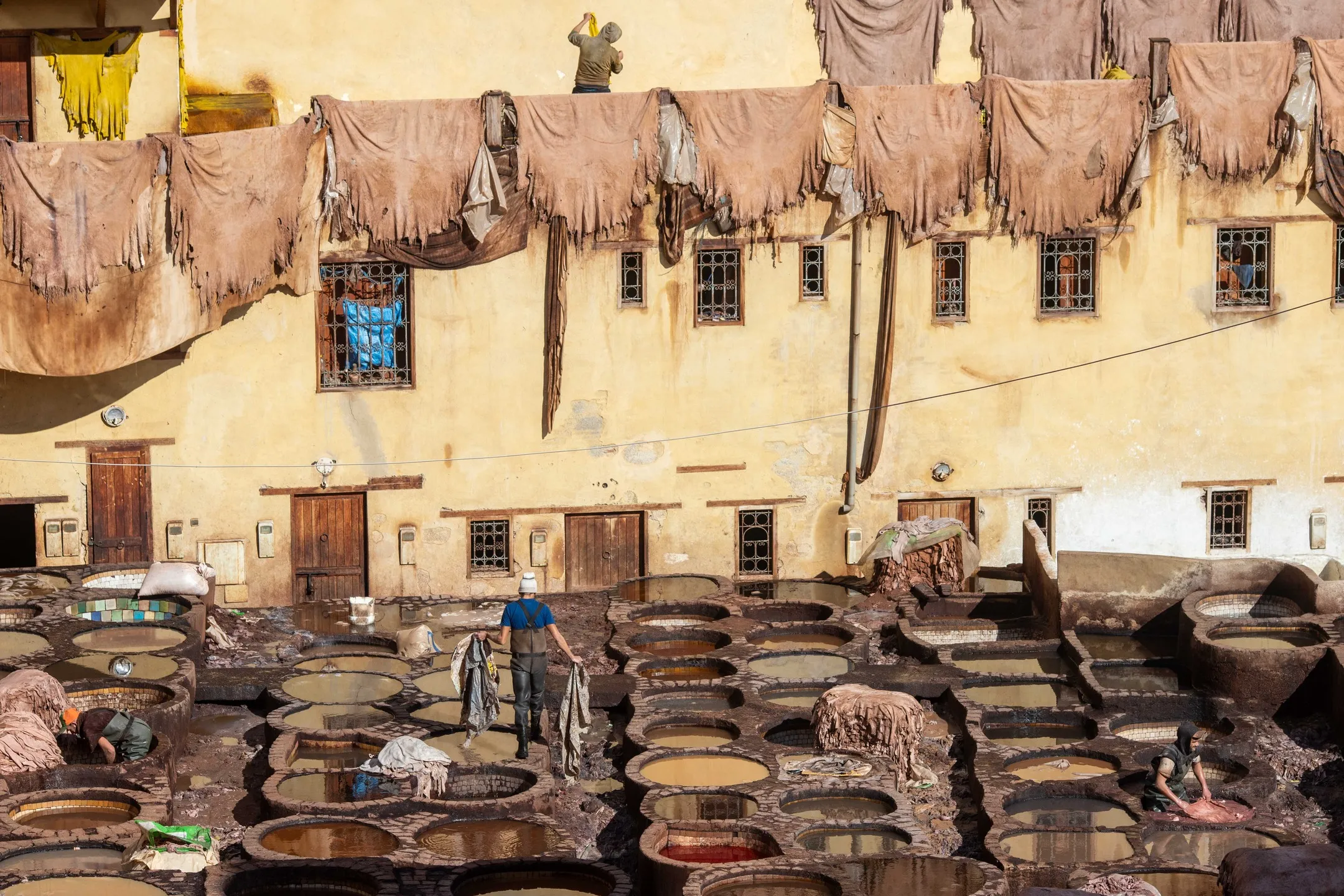
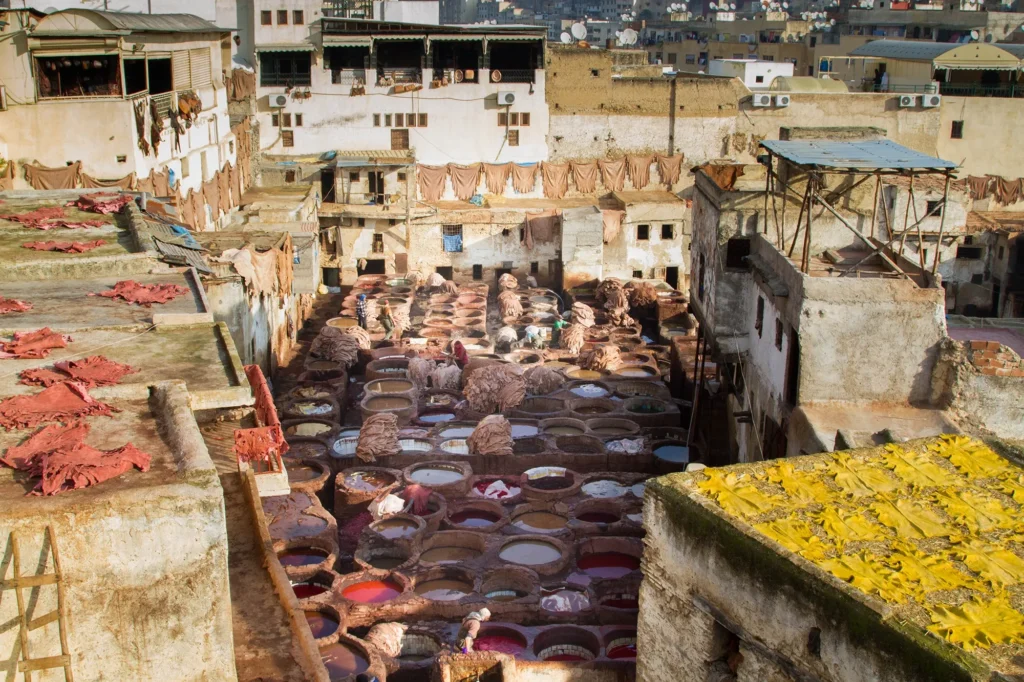
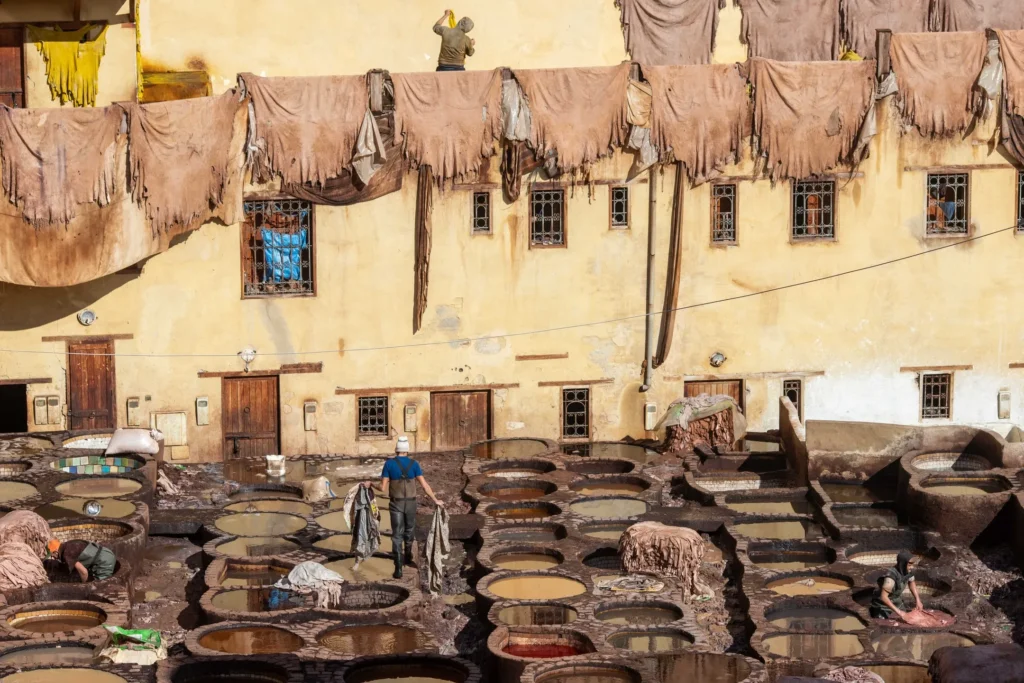
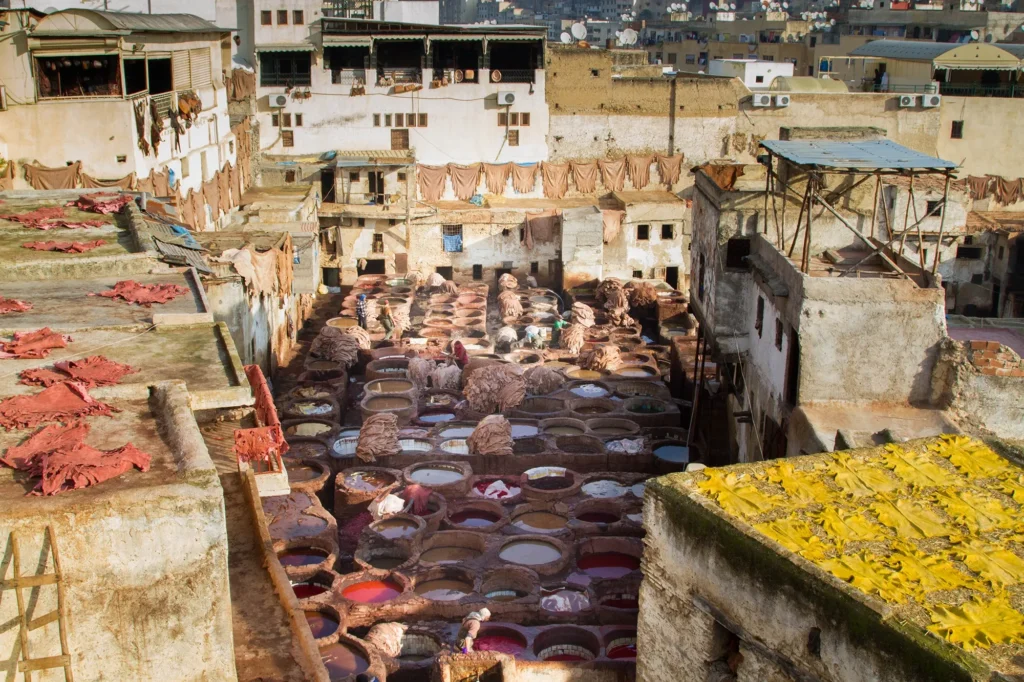
Fes is the city most closely associated with Moroccan leather in the international imagination. Its famous open-air tanneries, visible from surrounding rooftops, have operated in more or less the same way for centuries. Hides are soaked in large stone vats filled with natural solutions: pigeon waste for softening, plant-derived dyes for color, and various tannins to preserve the leather.
The result of this process is vegetable-tanned leather with a characteristic depth of color and a slight stiffness that softens beautifully with use. Fes leather is known for its earthy palette — rich browns, cognacs, ochres, and deep reds derived from natural pigments rather than synthetic dyes. This tradition directly influences the tones and textures we seek when selecting leather for Quirvow bags.
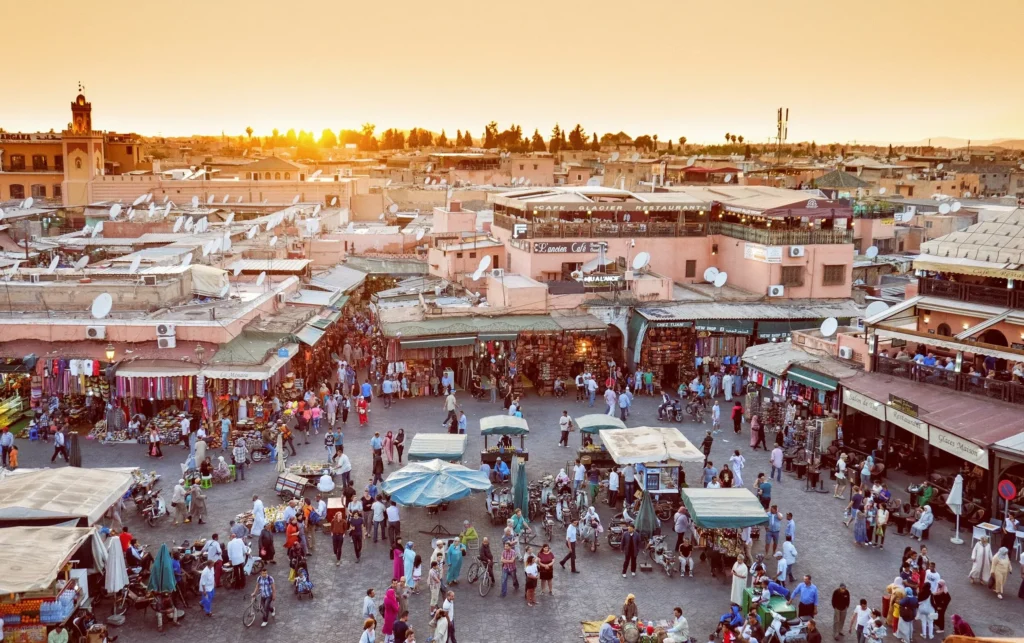
Marrakech has its own distinct leather aesthetic, shaped by its history as a major trading hub. Leather goods from Marrakech often feature decorative stitching, embossed geometric patterns, and bright colors that reflect the city’s vibrant market culture. The emphasis in Marrakech is frequently on the visual surface — on the leather as a canvas for ornamentation.
While Quirvow bags are more restrained in decoration, the Marrakchi tradition reminds us that leather can carry detail well. We incorporate this understanding in the way we approach edge finishing and subtle stitching patterns.
The leather traditions of northern Morocco, particularly around Tetouan, carry a different lineage — one shaped by centuries of exchange with Andalusian craftspeople who came to Morocco during the Spanish Reconquista. Leather goods from this region often feature more refined silhouettes and smoother finishes, reflecting a European-influenced aesthetic that co-existed with traditional Moroccan methods.
This blend of precision and tradition is something we think about when designing bags intended for daily use in the United States — where the aesthetic sensibility is different from Morocco, but the desire for quality and honesty of materials is the same.
Quirvow is based in Azrou, a smaller city in the Middle Atlas region of Morocco. Azrou is not a leather town in the way Fes or Marrakech are — it is quieter, more agricultural, surrounded by cedar forest. But that position gives us something valuable: the ability to draw on the full breadth of Moroccan leather traditions without being defined by just one of them.
When we design a bag, we are not trying to reproduce a specific regional style. We are trying to identify what makes Moroccan leather genuinely good — the material quality, the construction method, the honest relationship between the surface and the structure — and apply those principles to designs that work for modern, practical life.
Most Quirvow bags prioritize structure over ornament. This reflects the influence of the Fes tradition, where the quality of the leather itself is the feature — not embellishment layered on top of it.
We prefer leather in colors that emerge from the tanning and dyeing process rather than synthetic finishes. Browns, chocolates, cognacs, and blacks that deepen with use over time are closer to the Moroccan leather tradition we respect.
The bags we make are intended for daily use — commuting, travel, and work. We look at Moroccan utilitarian leather goods — the everyday bags that craftspeople made for their own communities — as much as we look at decorative pieces. Practicality is a form of respect for the user.
Moroccan leather craftsmanship is not a museum piece. It is practiced today by artisans who continue to learn, adapt, and improve the methods they inherited. At Quirvow, we work with craftspeople who bring that living tradition to every bag they make.
The regional styles described here are not rigid categories — they overlap, evolve, and influence each other. What matters to us is the underlying ethos: leather made by hand, from honest materials, by people who care about what they are making.
That is what we try to bring to every Quirvow bag we send to a customer in the United States.
No account yet?
Create an Account